
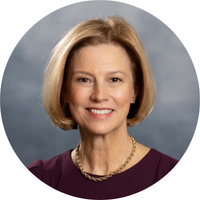
MESA mentor Mary Schneider has built her career at the intersection of technology, sales, marketing, and customer experience. From boutique agencies and software companies to complex global organizations such as BASF and Cargill, her work has consistently centered on one question: What problem are we trying to solve, and how can technology help us solve it?
That same mindset shapes her approach to mentoring. Mary brings founders strategic perspective, thoughtful questions, and a healthy insistence on focus and follow-through—while making sure the founder remains firmly in the driver’s seat.
Tell me a little bit about your background, Mary.
My career has really centered on what we now call digital transformation, particularly on the customer-facing side of the business.
 I started in boutique agencies when clients had budgets for custom development, and I drove programs and projects such as lead generation, customer experience, sales enablement, and pipeline management, as well as measurement and metrics for marketing and digital investments. I had the opportunity to work with large client organizations, including IBM, Hewlett-Packard, and Motorola, which really immersed me in understanding customer needs, defining process improvements, and developing solutions aligned to business outcomes.
Developing my back-end experience was fundamental in my growth, and over time, I wanted to understand more front-end strategy as well—branding, demand creation, sales, and go-to-market strategy. That gave me a good blend of both sides: developing the strategy and customer experience, while also understanding the process, metrics, and technology required to support it.
That eventually led me into software environments, where I managed product portfolios and worked across a variety of sales and marketing channels. Throughout my career, the common thread has been bringing together business strategy, sales, marketing, customer experience, and technology to solve real problems.
Later, at BASF and Cargill, I had the opportunity to work with teams around the world, which gave me an entirely different perspective on business, technology, and the ways people work. Different markets and cultures may approach challenges differently, but at the end of the day, businesses everywhere are still trying to solve fundamental issues around growth, productivity, efficiency, and delivering on the promise they make to customers.
Today, in addition to being a mentor with MESA, I serve on boards, including an AI start-up in the agricultural industry. I enjoy being involved in governance and bringing my experience to organizations as they evaluate opportunities, seek capital, and make strategic decisions.
On a personal level, I love almost anything outdoors. I’m an avid bicyclist and kayaker, and I enjoy golf and skiing as well. Staying active and being outside are a big part of my life.
You’ve also invested a lot in your own continued education. How has that shaped your perspective?
I’ve always believed in lifelong learning. My MBA gave me a strategic foundation, but I’ve continued to build on that with product and strategy work through BASF at the University of Mannheim in Germany—giving me a much more global view of how businesses compete and communicate, as well as supply chain complexity. Also, through BASF, I participated in an executive women’s leadership program at the University of Virginia, which sharpened how I lead teams.
More recently, I completed an AI and business strategy program through MIT, which has been enormously helpful as I think about how founders and businesses should be evaluating AI—not as a strategy in itself, but as a tool in service of a clear problem.
That’s part of why I’m so passionate about keeping technology human-centered. Start with the problem, apply critical thinking, and then figure out which tools—AI included—actually help solve it.
Tell us about a moment in your career that fundamentally changed how you think about building a business.
One of the most formative experiences in my career was joining a publicly traded company that had grown through multiple acquisitions without effectively integrating them. By the time new leadership came in, the company was hemorrhaging money and needed significant change to turn the financials around and focus on scale and efficiency.
It required some very difficult and emotionally painful decisions, including terminations. We had to move from a largely tactical environment to one that was much more strategic and results-oriented, aligned to corporate objectives and tied to financial results.
I rebuilt much of the team and put the infrastructure in place to operate more consistently and strategically. We implemented Salesforce, introduced marketing automation, developed strategic campaigns, created a customer advisory board, built an inside sales function, and established brand and identity standards. We also developed a data-driven approach to defining problems and better aligning to business objectives.
What that experience taught me is that building a business sometimes requires making very hard choices in order to create clarity and sustainability and to perform successfully both in the short and long term. You need consistency in how you operate and how you show up in the market, and you have to stay focused on the outcomes you are trying to achieve.
It was one of the most difficult experiences of my career, but also one of the accomplishments I’m most proud of.
How long have you been a MESA mentor, Mary, and what made you get involved?
I’ve been a MESA mentor for a year and a half. Someone I know suggested MESA when I told him I was looking for additional ways to contribute. He thought I would be a good mentor and encouraged me to learn more about the organization. Once I looked into MESA and met some of the people involved, I was very compelled by the mission.
I remember the era when Minnesota was a computing powerhouse with companies like Control Data and Cray Research, and we were a highly respected and visible technology presence. Today, Minnesota remains incredibly strong in areas like medical technology, but I think we’ve lost some of that broader technology innovation muscle.
That’s part of what drew me to MESA. How do we help build that back? How do we support the startup environment and help SaaS, software, and AI companies—and the founders behind them—navigate complex situations?
I felt that my skills and experience could contribute to that, and I’m passionate about helping build that capability here in Minnesota.
When you first meet a founder, what are you listening for?
First and foremost, I’m listening for a clear articulation of the problem they are trying to solve. If they can’t articulate it clearly yet, that may be something I can help them work through.
I also want to understand where they believe they need help and support. Do they understand their market? Their financial situation and capital needs? Their product development and go-to-market paths?
They don’t need to have every answer. Startups pivot, and that’s part of the process. But I do look for founders who genuinely want support and are willing to build a relationship where they can be open, honest, and vulnerable. That creates the foundation for a meaningful mentoring relationship.
How do you balance sharing insight or giving advice with letting founders figure things out?
When I first met with Jim Moar, past president, he made an important point: MESA mentors are advisors. We’re not there to get into the operations of the company. Initially, I wondered whether that would be difficult for me, because when you see something you know how to address, your instinct can be to jump in and fix it.
What I’ve found works best is asking open-ended questions: Tell me what you think about this. How do you want to approach it? What do you see as the options?
I try to put the answer back in the founder’s hands.
If a founder specifically asks me to go deeper, for example, helping think through a go-to-market plan, I’m happy to bring my experience and ideas to the table. But ultimately, it’s their company. They need to drive the business.
I like to take a Socratic approach: ask questions that may help founders uncover an answer they already have inside them but haven’t fully articulated yet.
What’s one piece of advice you find yourself giving to founders over and over again?
Stay focused.
Startups are surrounded by shiny objects. Someone is always saying, “Have you thought about this?” or “What if you did that?” Some of those ideas may be very good ideas, but that doesn’t mean they’re what you should be doing right now.
I often find myself saying: Here’s where we are today. Here’s the problem we’re trying to solve. Let’s make a note of those other opportunities, but let’s deliver on this first. I joke that I can be a bit of a “diplomatic nag” about focus.
Closely connected to focus is follow-through.
Early in my career, I learned: Say what you’re going to do, do what you say you’re going to do, and follow through. If circumstances change and you can’t deliver something when you said you would, communicate proactively. Customers, colleagues, and investors notice the difference.
For me, those two things—focus and follow-through—are foundational.
Tell us about the company you’re currently mentoring through MESA.
I’m currently mentoring Chris Anderson, founder of Controllr. Chris has a professional services business, and he identified an opportunity to take some of the consistent processes within that business and develop a SaaS model around them.
It’s been fascinating to watch that transition. He came into MESA looking for trusted advisors—people he could speak with candidly and openly as he works through the decisions involved in building the SaaS business.
It has been a pleasure to work with him and to provide support, guidance, and perspective. I’m very conscious about being present and engaged with the founder I’m mentoring, but as that relationship continues to develop, I could see taking on another mentee as well.
What motivates you to keep mentoring, Mary?
I want to give back and contribute, particularly to rebuilding and strengthening Minnesota’s technology community.
I don’t think I’m someone who is going to go out and start a company myself, but I know I can offer meaningful support to someone who does. I have tremendous respect and admiration for people who are willing to take that risk. Founders put themselves out there in a way most people never will. Being able to provide support, guidance, and experience that helps them move forward gives me a tremendous amount of satisfaction.
That’s what I get from mentoring.
Any final thoughts or advice?
For founders, and any business really, start with the problem you’re trying to solve. Be clear about it, and don’t let technology or the latest opportunity become the strategy simply because it’s available.
Stay focused on what matters now. Follow through on what you commit to. And surround yourself with people who will ask you good questions, challenge your thinking, and help you see possibilities without trying to run the business for you.
That combination of focus, follow-through, and trusted perspective can take you a long way.

